Urea
Clinical Biochemistry
Background Information
Urea forms part of the standard Acute Unit “U&E” (urea and electrolytes) profile, although it can also be requested by Primary Care if necessary. Note that urea is not useful as a general marker of renal disease; creatinine and eGFR are preferred for this.
Urea may be helpful in suspected pre-renal failure (e.g. fluid depletion or cardiac failure), in monitoring dialysis adequacy, in predicting the severity of acute pancreatitis and in suspected inherited metabolic disease.
Patient Preparation
No specific preparation is required
Sample Requirements
For adults, blood taken into a 5mL gold top gel tube (rust top for the Acute Unit)

For children, blood taken into a 3.5mL rust top gel tube

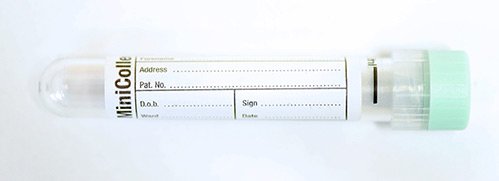
For neonates, blood taken into a 0.8mL minicollect lithium heparin tube. Please list the tests of particular interest so that some priority can be given to analysis if plasma volumes are small.
Storage/Transport
Send at ambient temperature to the laboratory. If unavoidable, samples can be stored refrigerated overnight.
Required Information
Relevant clinical details. Site of drain for non-blood or non-urine samples.
Turnaround Times
This test is run throughout the day and night. The in-lab turnaround time is normally less than 24 hours. The test can be ordered as an urgent request.
Reference Ranges
The reference range for blood urea is 2.5 - 7.8 mmol/L
Further Information
To learn more about urea visit Lab Tests Online UK
Page last updated: 07/05/2026 | Page last reviewed: 01/07/2026