Thyroid Function Tests (TSH, FT4, FT3)
Clinical Biochemistry
Background Information
- Thyroid function tests (TFTs) include thyroid stimulating hormone (TSH, also known as thyrotropin), free T4 (FT4; thyroxine) and free T3 (FT3; tri-iodothyronine).
- These tests are variably indicated for investigation of possible hypo- or hyper- thyroidism, for monitoring of adequacy of thyroid hormone replacement, for monitoring of anti-thyroid treatment, for the investigation of the hypothalamic-pituitary-thyroid axis and for management of thyroid carcinoma.
- TSH is the frontline investigation of thyroid disease, with FT4 and FT3 being reflexed by the laboratory as appropriate based on the TSH result, previous results, and available clinical details.
- The Clinical Biochemistry department has a specific testing strategy for Thyroid Function Testing that is based on NICE guidance. This strategy can be found here: GHNHSFT Clinical Biochemistry Thyroid Testing Strategy.pptx
- If there is a possibility of hypothalamic or pituitary disease, please state this clearly on the request form, as FT4 should be assayed alongside TSH in these cases.
- TFTs may be misleading in patients with non-thyroidal illness. Unless there is a strong suspicion of thyroid disease, these tests are not advised for hospital in-patients because of the difficulty in result interpretation. TFTs should be delayed until 3 months post acute illness.
- Please wait at least 2 months after any change in thyroid hormone replacement before repeating blood tests.
- TSH levels may remain suppressed for many months after treatment for thyrotoxicosis has commenced. FT4 and FT3 provide better information for clinical management.
- Amiodarone may precipitate changes in TSH, FT4 and FT3. TFTs should be performed before treatment starts and, once stable, every 6 months thereafter.
- Lithium can interfere with thyroid function and patients on this medication should be regularly monitored, with thyroid function being checked before commencing the drug and then at a minimum of every 6 months thereafter (along with renal function and calcium levels).
Sample Requirements
- For patients taking high dose biotin therapy (>5mg/day), collect sample at least 8 hours after the last dose.
- Please note there is a minimum retesting interval of one month for TFTs
For adults, blood taken into a 5mL gold top gel tube (or rust top for the Acute Unit)

For children, blood taken into a 3.5mL rust top gel tube

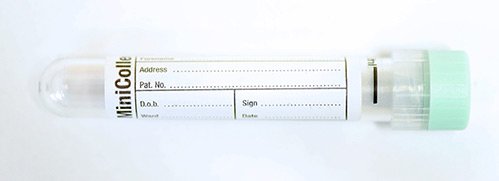
For neonates, blood taken into a 0.8mL minicollect lithium heparin tube
Storage/Transport
Send at ambient temperature to the laboratory. If unavoidable, samples can be stored refrigerated overnight.
Required Information
Relevant clinical details including current treatment (especially T4 or T3 replacement, anti-thyroid drugs, amiodarone or lithium), post thyroid surgery, radioiodine, or suspicion of hypothalamic or pituitary disease.
Turnaround Times
The assays are run throughout the day and night.
The turnaround time is normally less than 24 hours.
The test can be ordered as an urgent request.
Reference Ranges
Adult Reference Ranges:
TSH: 0.27 - 4.2 mIU/L
FT4: 12.0 - 22.0 pmol/L
FT3: 3.1 - 6.8 pmol/L
Age-related reference ranges for children apply as displayed in the table below.
Please note there are also pregnancy related reference ranges displayed below.
| 0 -6 Days | 7-14 Days | 15 Days - 16 Years | |
|---|---|---|---|
| TSH (mIU/L) | 0.7 - 15.2 | 0.72 - 11.0 | 0.27 - 4.2 |
| Free T4 (pmol/L) | 11.0 - 32.0 | 11.5 - 28.3 | 12.0 - 22.0 |
| Free T3 (pmol/L) | 2.7 - 9.7 | 3.0 - 9.3 | 3.1 - 6.8 |
| 1st trimester | 2nd trimester | 3rd trimester | |
|---|---|---|---|
| TSH (mIU/L) | 0.3 - 4.6 | 0.4 - 4.1 | 0.2 - 3.2 |
| Free T4 (pmol/L) | 12.1 - 19.6 | 9.6 - 17.0 | 8.4 - 16.0 |
| Free T3 (pmol/L) | 3.8 - 6.0 | 3.2 - 5.5 | 3.1 - 5.0 |
Further Information
To learn more about thyroid function testing visit Lab Tests Online
Page last updated: 01/07/2026 | Page last reviewed: 01/07/2026