CRP (C-reactive protein)
Clinical Biochemistry
Background Information
- C-reactive protein (CRP) is a non-specific marker of infection and inflammation.
- CRP is a more sensitive, rapidly responding, indicator than ESR or viscosity.
- CRP can be used to identify the presence of inflammation, determine its severity, and monitor response to treatment.
- As CRP is a non-specific marker of inflammation, it does not indicate the organ or organs affected.
- The use of CRP measurement as a screening test for the presence of inflammation is not advised.
Patient Preparation
- No specific preparation required
Sample Requirements
- Please note there is a minimum retesting interval for CRP of 24 hours.
- For adults, blood taken into a 5mL gold top tube (rust top for the Acute Unit)

For children, blood taken into a 3.5mL rust top tube

For neonates, blood taken into a 0.8mL minicollect lithium heparin tube
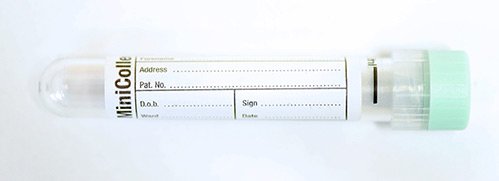
Storage/transport
Send at ambient temperature to the laboratory. If unavoidable, samples can be stored refrigerated overnight.
Required information
Relevant clinical details should be provided with the request.
Turnaround times
The assays are run throughout the day and night.
The in-lab turnaround time is less than 24 hours.
The test can be ordered as an urgent request.
Reference ranges
Less than 5 mg/L for adults.
The CRP reference range may not be applicable to neonates - the immune response may be immature and CRP levels of <5 mg/L may be significant.
Further information
To learn more about CRP Lab Tests Online: C-Reactive Protein
Page last updated: 06/01/2026 | Page last reviewed: 06/01/2026